
Our Commitment
Members have asked a range of questions about the food and drink served at the Club: how the coconut water is made, whether the juices contain anything besides fruit, why a dish sometimes arrives warm. This page answers those questions in one place, alongside the certificates, laboratory reports and methods behind the answers.
How we work
- Ingredients. Juices are pressed from fruit alone. Coconut water is pasteurised rather than chemically preserved. Where a product carries a certificate or a laboratory analysis, the original document is kept.
- Cooking to order. Dishes are cooked from raw once the order reaches the kitchen. Food is not pre-cooked and reheated, and cooked dishes are not held under a lamp.
- Trade-offs. Some decisions are made for speed or consistency rather than for flavour. Where that is the case, the relevant page explains what the trade-off is and why.
- Documents. Certificates, laboratory reports and supplier documents can be produced for any member who asks to see them.
- Feedback. Comments are recorded on a written register with an owner and an outcome. The You Said, We Listened page shows what changed as a result.
What we are working towards
- Food that members choose because they want it, not because they are already at the Club.
- Serving times reliable enough to plan a round or a meeting around.
- A kitchen that would pass an unannounced inspection on any day of the week.
About the cordial in the store. Cordial is stocked for banquet and catering events, where clients frequently request it as a light refreshment for their guests.
It is not used in the fresh juices, which are pressed from fruit alone. The Fresh Juices page sets out what goes into them.
Each tab covers one subject in detail. If a question is not answered here, it can be added.
How We Started
The previous operator resigned at short notice. MBFE was appointed to take over food and beverage at the Club with ten days to prepare.
Ten days covered hiring a kitchen brigade, a service team and a management team, setting up suppliers, building a menu, installing a point-of-sale system, stocking four outlets and opening the doors. On the day of appointment there were no MBFE staff on site.
We took it on for two reasons. The Club needed someone to step in quickly, and we wanted the opportunity to show what we can do somewhere that matters.
What was prioritised
With that little time, one thing was placed above everything else: the Club would not go a single day without food service. That held. From the first day of August the kitchen has opened every morning and served every day since.
What it involved
A team built from nothing to close to forty people within weeks. Trial services, menus rewritten, equipment sourced, recipes tested and retested. Staff who had known each other for days learning to run a busy lunch service together. The team worked long hours throughout that period.
What went wrong
A number of things. Dishes that were not up to standard. Service that was too slow at the peak. Items that ran out. A point-of-sale system that caused problems through the first fortnight. Members who waited too long.
Each complaint received is written down. The You Said, We Listened page records what happened to every one of them.
Where things stand now
The menu has been reworked around what members actually order. Kitchen stations have been reorganised. Serving times are displayed at the door and updated through service. A written feedback register sits behind everything on this site, and several dishes have already changed because a member raised them.
Steadier, though not yet where we intend to be.
We are here to serve you, and we would welcome the chance to show what MBFE can do. We ask for a little patience while we get there — not endless patience, and not patience instead of standards, but the room to keep improving something that was assembled in ten days.
When we fall short, telling us is the fastest way it gets fixed.
Coconut Water
The coconut water served at the Club is made from whole young pandan coconuts grown in Perak and processed at a Ministry of Health–certified facility in Teluk Intan. The coconut is washed whole, opened by machine, and the water runs directly into sealed stainless tanks. From that point it does not meet open air, an open vessel or a human hand.
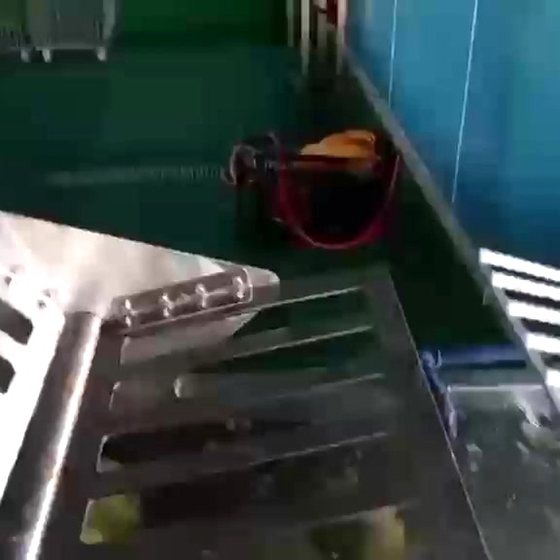
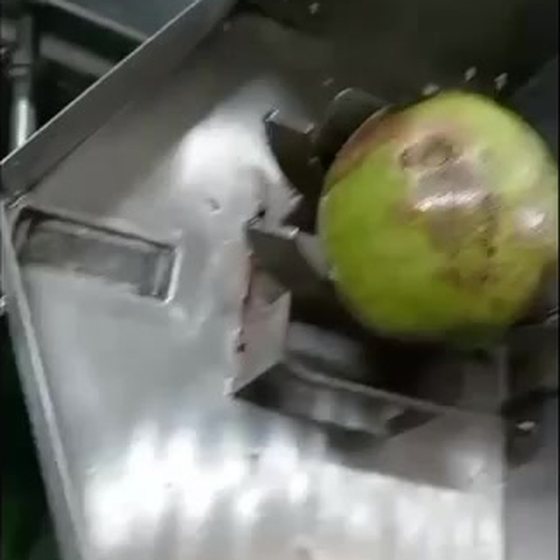
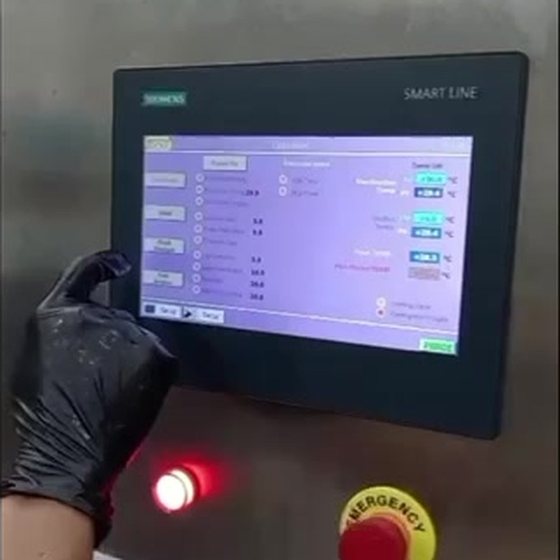
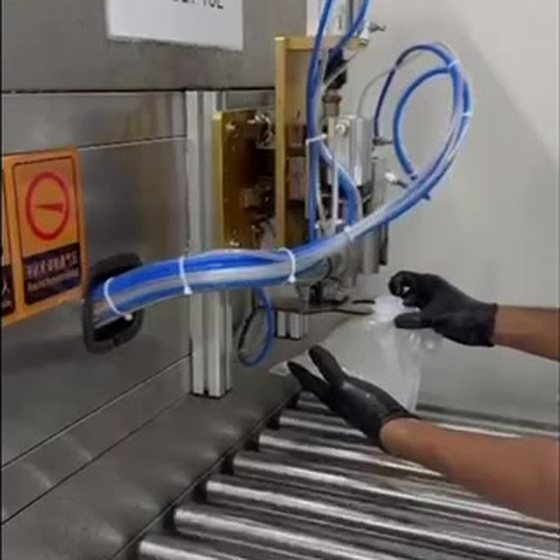
Stills from the producer's own line at Teluk Intan.
Pasteurisation, and why no preservative is used
A preservative works by preventing the growth of the organisms that spoil a drink. Pasteurisation achieves the same result by a different route: the water is heated to a controlled temperature for a set time, which removes those organisms, and refrigeration then keeps the product stable. Once that has been done, a chemical preservative serves no further purpose.
The processing is also closed. Because the shell is washed before it is cut and the water is drawn straight into sealed tanks, the drink is never decanted or exposed between the coconut and the pack.
The ingredient list is coconut water only — no added sugar, colouring or flavouring. The pandan aroma comes from the coconut variety itself rather than from an additive.
Nutrition · per 100 ml
| Energy | 18 kcal |
| Total sugar (naturally occurring) | 3.1 g |
| Protein | 0.1 g |
| Fat | less than 0.1 g |
| Potassium | 179 mg |
| Sodium | 11 mg |
| Calcium | 11 mg |
| Cholesterol | less than 5 mg |
The 3.1 g of sugar occurs naturally in the coconut; none is added. Analysis by Allied Chemists Laboratory Sdn Bhd, 8 July 2026.
Certification
Pasteurised coconut water and freshly opened coconuts
Both are coconut water with nothing added, and the two are close in composition — the same naturally occurring sugars and minerals, potassium chief among them. The differences come from variety and from processing, and each has advantages and disadvantages.
Variety. Pandan coconut is an aromatic variety with a distinct fragrance and a rounder sweetness. A standard young green coconut tastes lighter and greener. Neither is more natural than the other; a freshly opened pandan nut and a freshly opened green nut also taste different from one another.
A freshly opened coconut. The aroma is at its brightest, nothing sits between the fruit and the drinker, and being served in the shell is part of the appeal for many people. Against that, quality varies from nut to nut — sweetness differs, and an occasional nut has soured, which is only apparent once it is opened. The shell has been in soil, transport and storage, so hygiene depends entirely on how thoroughly it is washed before cutting. Preparation also takes time, which makes it harder to serve quickly or across several outlets at once.
Pasteurised coconut water. It is consistent from glass to glass, the shell is washed before opening and the drink is sealed thereafter, and it is microbiologically stable so it keeps safely and can be poured immediately anywhere on the premises. Against that, heat treatment softens the aroma slightly compared with a nut opened at the table, and it arrives in a pack rather than in the shell.
They are the same drink prepared two different ways. Which one suits better depends on whether aroma and occasion matter most on the day, or consistency and speed.
Some members have asked whether whole coconuts might also be served. That request is recorded on the feedback register and is being considered.
Visiting the plant
Members are welcome to visit the plant at Teluk Intan and see the process directly — the coconuts arriving whole, the wash line, the opening machine, the pasteuriser and the filling hall. Visits are arranged with the factory manager; any member of our management team can organise a date.
Produced by Iringan Inspirasi Sdn Bhd, Teluk Intan, Perak. The original certificates, the full certificate of analysis and footage of the production line are available on request.
Fresh Juices
The juices are pressed from fruit and contain nothing else — no sugar, water, cordial or concentrate.
Nothing is added to stretch, sweeten or colour them, which means the flavour follows the fruit. If a batch of oranges is sweeter one week than the next, the juice will be too.
When they are pressed
Monday to Thursday — pressed to order, glass by glass.
Friday to Sunday and public holidays — pressing begins at around 10:30am, ahead of the lunch period, and the dispenser is topped up through the day as it runs low.
Why weekend juice is pressed in batches. A single glass takes a few minutes to press, wash down and serve. At a busy weekend service that becomes a long wait for anyone fourth or fifth in the queue, and it pulls staff away from the rest of the beverage station.
Pressing in batches through the day means drinks reach the table quickly at the point they are ordered. What changes is when the juice was pressed. What does not change is what is in it — the same fruit, pressed the same day, with nothing added.
A glass pressed to order on a weekend can still be requested when ordering. It takes a little longer to prepare.
Serving Times
Different dishes take different lengths of time to prepare, and the kitchen's workload changes through the day.
A card at the entrance displays the current serving time — five, ten, fifteen, twenty, twenty-five or thirty minutes. It is changed through service as the load changes, so it reflects what the kitchen is running at when you sit down rather than a printed average.
Cooked to order
Char kway teow, mee goreng mamak, nasi goreng, curry laksa, grilled chicken chop, fish and chips and anything from the wok or the grill is started from raw once the order reaches the kitchen. These cannot be prepared faster without affecting the result, and they are not held under a heat lamp in anticipation of an order.
Ready to serve
Pastries, kuih, the breakfast station, sandwiches, cut fruit and most cold drinks are already prepared and should reach the table quickly. If one of these takes a long time, something has gone wrong with the order.
If an order is running late
Mentioning it to the nearest member of staff is the quickest remedy. A dish that is significantly late has usually been missed rather than delayed, and it can only be picked up once someone knows.
Why Food Sometimes Arrives Warm
Members have told us that food sometimes arrives warm rather than piping hot. We have heard you, we agree, and we are working on a solution together with Club management.
The cause is the airflow between the two rooms rather than the way the food is cooked. The explanation is below.
What happens at the doorway
A commercial kitchen extraction system removes a large volume of air in order to clear heat, steam and cooking odours. That air has to be replaced, and it is drawn from wherever the kitchen can find it. When the door to the Main Lounge opens, the nearest available source is the air-conditioned dining room, so cold air moves through the doorway towards the kitchen.
A plate carried out at that moment passes through the incoming stream of cold air, and loses heat in the few seconds it takes to cross. Because the loss happens after the dish leaves the pass, cooking it hotter does not solve it.
What is done at present
Food covers are used on the way out and retain heat well. They are not a complete answer: a number of dishes are plated for presentation on shapes that a cover will not seat on properly, and altering the plating to suit a lid would change the dish.
Covers therefore address most of the problem, and the remainder is still lost at the doorway.
A longer-term fix
The airflow and door arrangement has been raised with Club management. A solution involves changing how air moves between the two rooms — for example air balancing, or the way the doorway is configured — rather than anything within the kitchen itself.
For clarity. This is heat lost in transit, not a consequence of how the food is prepared. Dishes are cooked from raw once the order reaches the kitchen; none is cooked in advance and reheated to serve.
A dish that reaches the table cooler than it should be can be sent back and will be remade. Doing so also helps establish how often it is happening, which is useful evidence when discussing a fix.
You Said, We Listened
The items below were raised by members since operations began. Each is held on a written register recording the item, the comment, the person responsible and the outcome. Names are not published here.
Put right
Being worked on
Watching
Our Kitchen
Most of what determines whether food is safe happens out of sight. The practices below each generate a written record, and any of those records can be produced on request.
The people handling your food
Under the Food Hygiene Regulations 2009, anyone handling food commercially in Malaysia must complete an approved food handling course and be vaccinated against typhoid. Every member of our food handling team is required to hold both before working a shift, and records are kept for each individual.
Cleaning
The kitchen runs to a written cleaning schedule that assigns each task — floors, walls, extraction hoods, chillers, stores and drains — to a named time slot outside service periods. It is signed off three times a day and verified by a duty manager. Deep cleaning tasks sit on a fixed weekly rota rather than being done as and when.
Pest control
A licensed contractor services the premises on a scheduled programme. Each visit produces a written service report recording what was found, what was treated and when the next visit falls due. Those reports are logged and retained.
Suppliers
Certification is held for the suppliers behind the items described on this site. Where a product carries a halal certificate, a laboratory analysis or a food safety certification, the original document is kept rather than a claim about it.
Any of the above — a certificate, a cleaning record, a pest control report — can be produced for a member who asks to see it.
Talk To Us
Every item on the You Said, We Listened page reached the register because a member raised it.
The form below takes about a minute. Responses are added to the same register, dated, and reviewed weekly.
About you
Your visit
The food
The drinks
Service
Cleanliness
Atmosphere
Value
In your own words
Speaking to us directly
Any member of our management team on the floor can record a comment at the time, without it needing to be put in writing first. Raising something during the meal is usually the most useful moment, since it can often be put right the same day.
Thank you
Your feedback is on the register. If you left a membership number we may come back to you.
Send another